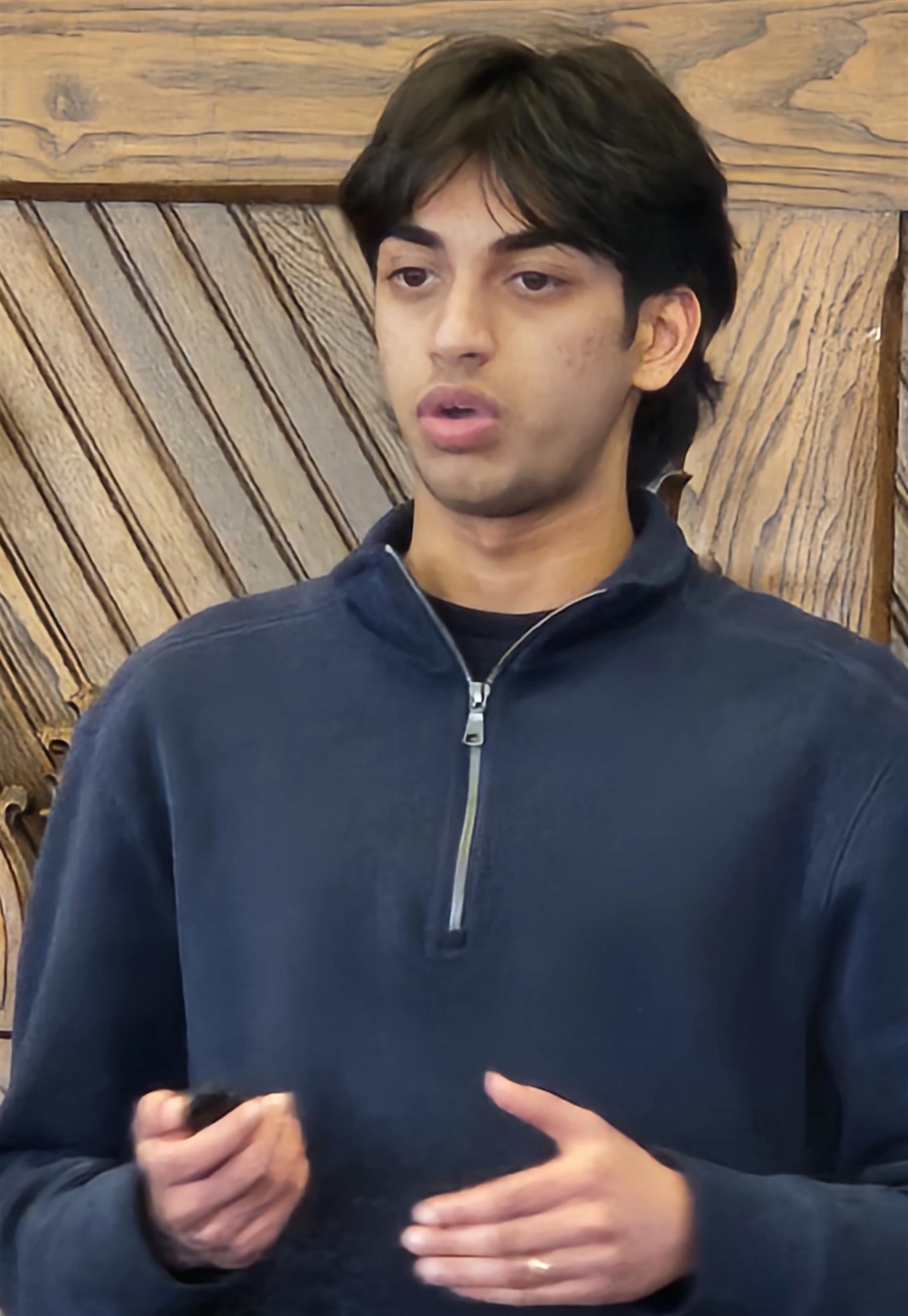
Vihan
Today we were introduced to a little understood malady that affects about one in fifty people, worldwide – Tourette syndrome.
Present, were Claudia Lijo, education outreach coordinator and Lisa Augliera, youth development coordinator from the New Jersey Center for Tourette Syndrome and Associated Disorders, Inc., and a young man, Vihan Iyer, who suffers from Tourette.
Claudia gave a brief overview of Tourette Syndrome (TS) which can be defined (from their web site) as ‘an inherited, neurological disorder characterized by repeated involuntary movements and uncontrollable vocal (phonic) sounds called tics. In a few cases, such tics can include inappropriate words and phrases.’ She added some additional basic information such as it effects males about three time more often than females and the symptoms lessen over time in about one third of the cases, remain stable in about one third of the cases and worsen in about one third of the cases. There is no cure, to date. Associated disorders are ADHD (attention deficit hyperactivity disorder), OCD (obsessive compulsive disorder) and anxiety.
We then heard from Vihan who discussed TS from the perspective of someone dealing with the syndrome. He began showing symptoms at the age of six. Pediatricians were unable to fully diagnose TS until he was eleven. He described his symptoms as tics. He noted that when he was able to articulate the cause of his sometimes-unusual behavior to his teachers and friends, they were tolerant, but less so, if explanations were not available. He told us TS is similar to an itch – it has to be scratched to make it go away, but it can recur, often for a while. He has learned some coping mechanisms, but there are no effective drug treatments.
In Q&A we learned TS is most likely genetic and can be passed from generation to generation. There are no medical tests to identify TS. Episodes can be triggered by stress, lack of sleep and excess excitement/anxiety.
The NJCTS&AS has a great website with considerable information about TS and outreach opportunities for sufferers: https://njcts.org/what-is-tourette-syndrome/ .
We greatly appreciate Vihan sharing his background in TS with us and Claudia & Lisa for telling us about NJCTS.
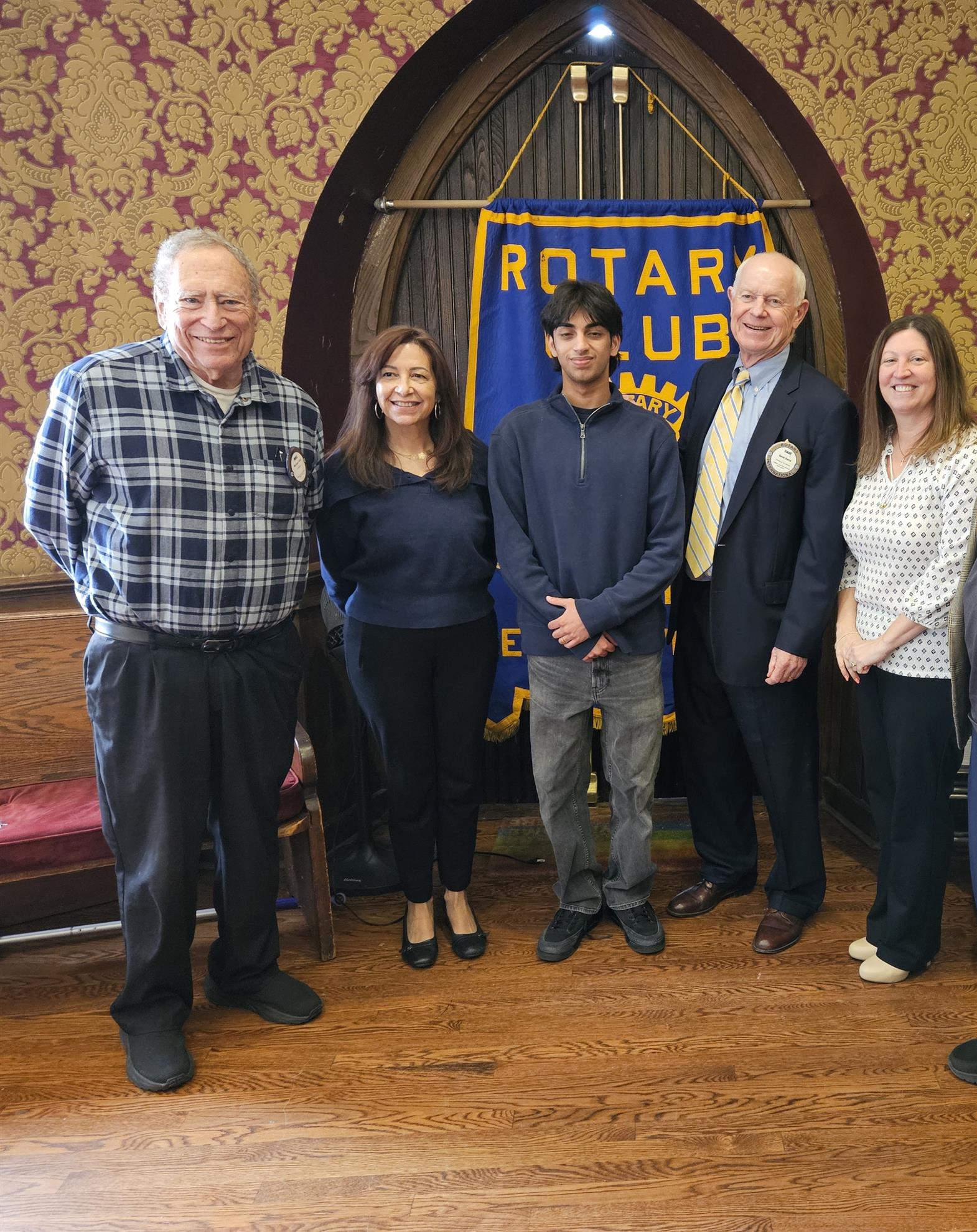
Mike Katz, Lisa, Vihan, David Dietze & Claudis